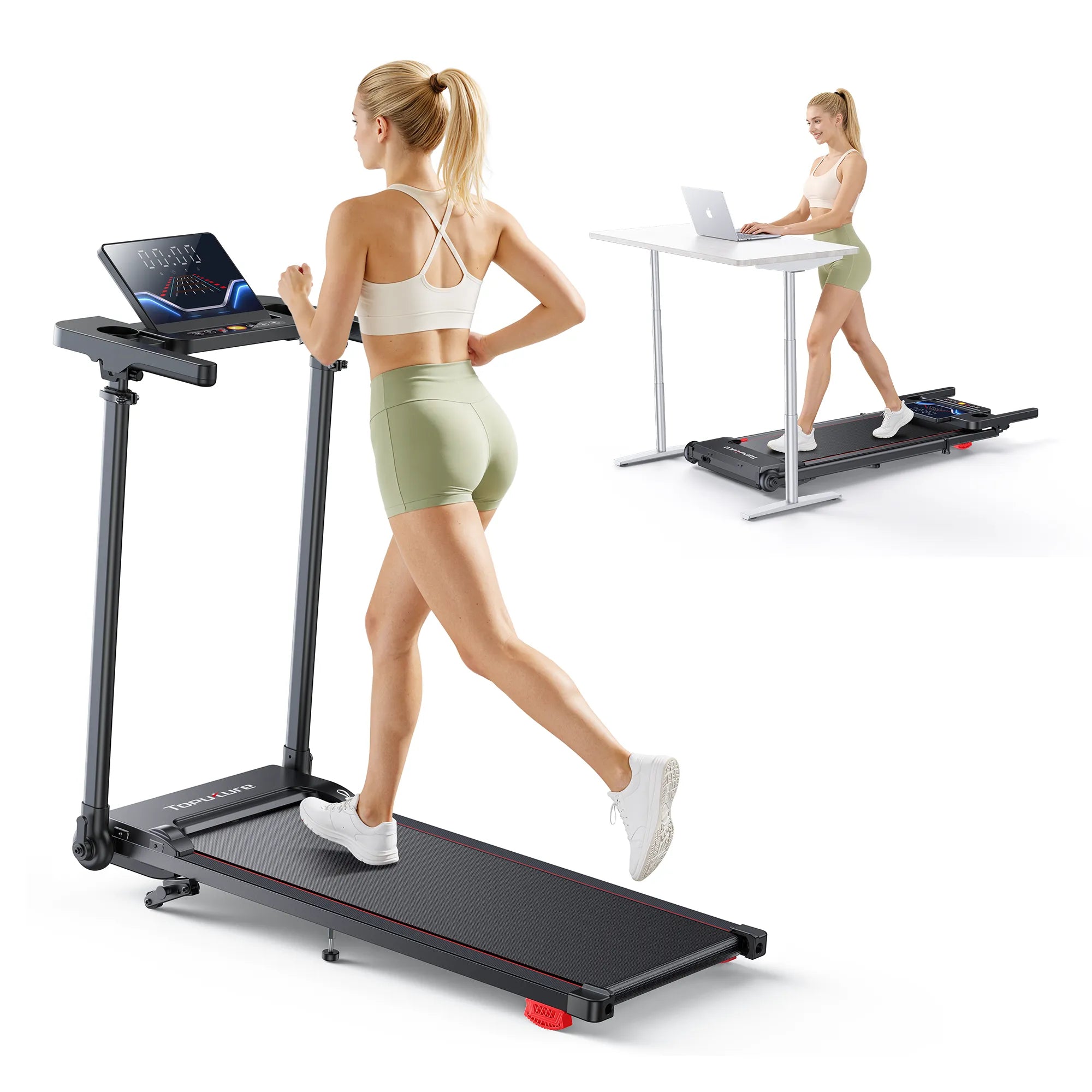
The ancient Greeks figured it out first: running makes a body strong, and a strong body carries a strong mind through everything else. A few thousand years later, the same instinct lives on in a machine that folds to five inches thin and slides under your sofa. The home treadmill has quietly become one of the most misunderstood pieces of equipment ever invented — loved by some, feared by others, and rarely used to even a fraction of its potential.
This is the story of what that machine can actually do: the physics hidden in its incline settings, the neuroscience of the runner’s high it delivers, the economics of a treadmill versus a gym membership, and the small, strange details — from the magnetic safety key to the lunchtime calorie burn — that nobody bothers to explain. Consider it the owner’s manual the box never included.
The Weather-Proof Advantage
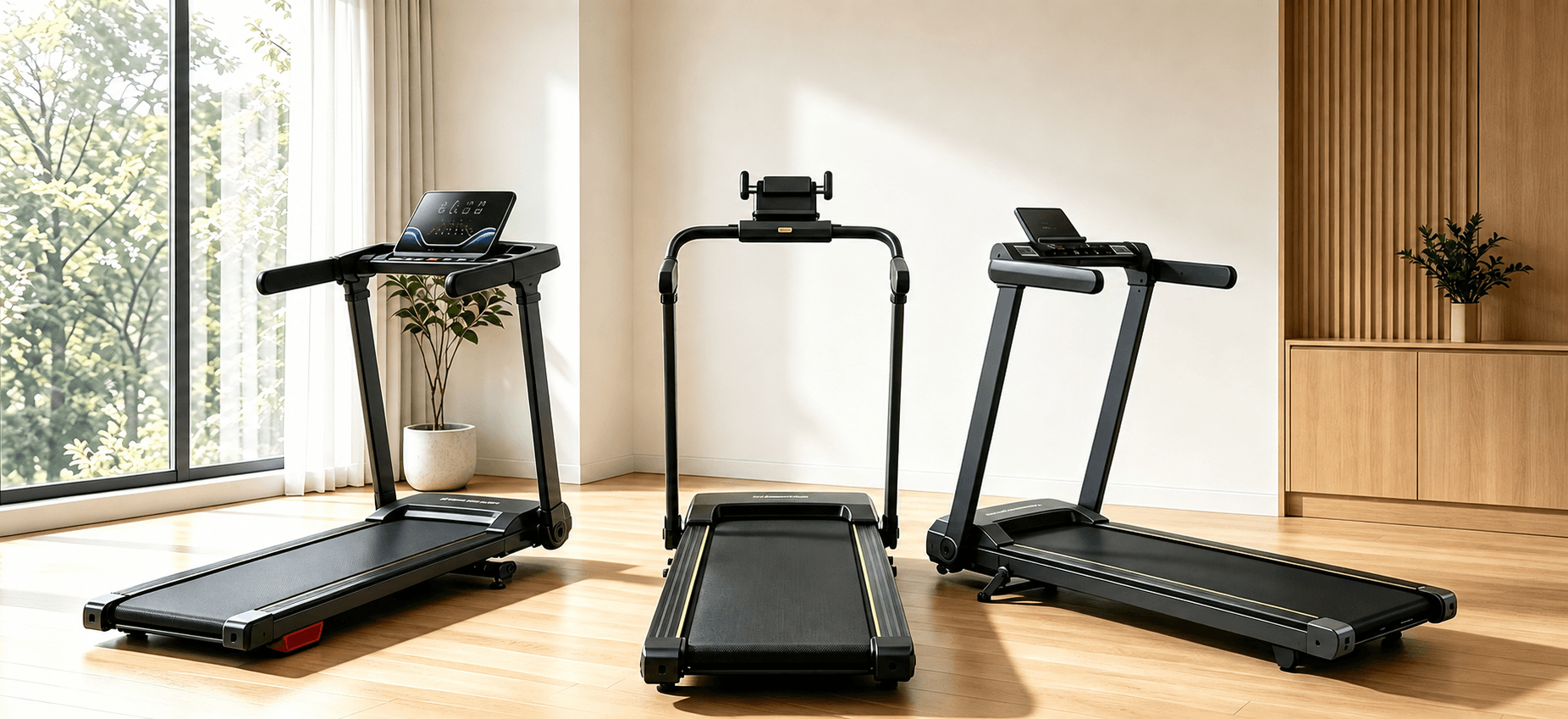
Every outdoor runner has the same archive of excuses: too hot, too cold, too wet, too dark, too icy. The treadmill deletes the entire folder. No commute to a gym, no crowded January queues for machines, no weather forecast to consult at 6 a.m. The belt is simply there — the same surface, the same temperature, the same controlled air, every single day of the year.
That consistency is not a small luxury; it is the engine of habit. Behavioral research keeps confirming that friction is what kills exercise routines, and a treadmill at home removes nearly all of it. The distance between your couch and your workout shrinks to about ten steps, which is precisely why home walkers tend to stick with their routines far longer than gym members.
The Calorie Math Nobody Does Out Loud
Here is a number that surprises most people: a 155-pound person walking at a brisk pace burns roughly 150 calories per half hour — and the same person running at a moderate clip burns nearly double. The gap widens with incline. Raise the belt to a 12 percent grade and even a slow walk starts demanding serious energy, because your body is now lifting itself uphill with every single step.
The treadmill makes this math visible and adjustable in a way no park ever could. Speed, incline, and duration become dials you can turn, and the console counts the cost in calories as you go. For anyone chasing weight management, the most interesting nuance is this: incline walking is almost as effective as flat running — at a fraction of the joint impact. A steep hill walk is the gentler twin of a hard run, and most machines make it available at the press of a button.
Incline: The Most Underused Button on the Machine
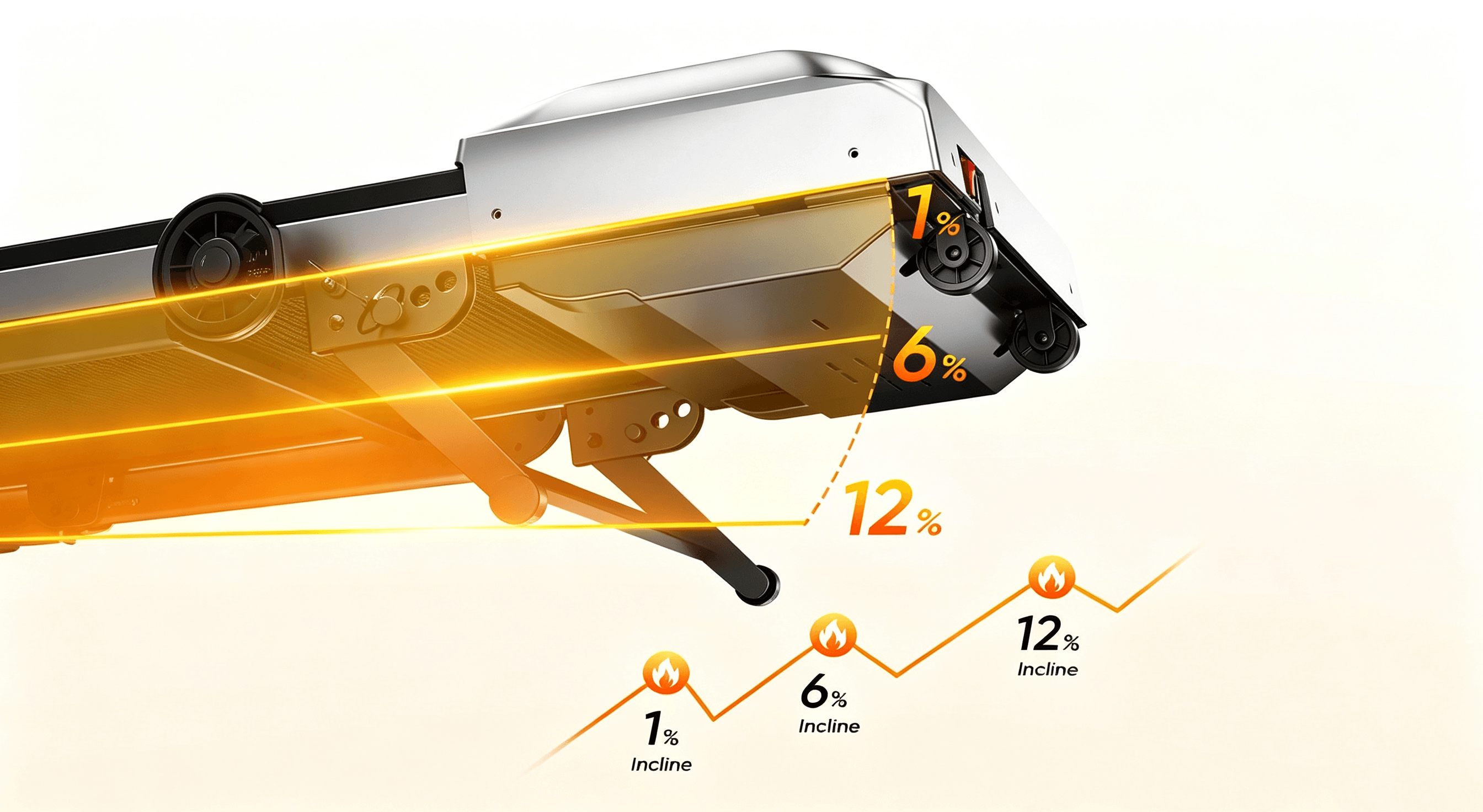
Walk into any gym and watch the treadmills. Nearly everyone runs flat. Yet the incline control is arguably the most powerful feature the machine owns. Setting the belt to even a few percent recruits your glutes, hamstrings, and calves dramatically harder than flat ground, raises your heart rate without requiring you to run, and can increase calorie burn by a third or more at the same walking speed.
Modern home models offer preset hill programs that roll these changes through a session automatically, imitating a rolling mountain route while you never leave the room. The physiology is straightforward: uphill work forces more muscle mass to participate, and more participating muscle means more oxygen demand, more calories, and more stimulus for the heart. Hill training indoors is simply honest effort, with the added benefit that nobody sees you slow down.
Under-Desk Walking: The Secret Desk Job
The newest chapter in the treadmill story is the walking pad — a slim, handlebar-free belt designed to disappear under a standing desk. The idea sounds almost too easy to count as exercise: walk at one or two miles per hour while answering email, taking calls, or editing documents. The accumulated math, however, is remarkable. Three or four hours of slow desk-walking can add five to eight thousand steps to a day without a single dedicated “workout.”
Some models now ship with a built-in laptop desk attached to the handlebar, tilting through a range of angles to keep a screen usable while the belt moves beneath you. Remote workers who adopt the habit often report the same pattern: energy stays more level through the afternoon, the post-lunch slump softens, and the step count the fitness tracker demands appears almost by itself.
The Decibel Question: Can Your Neighbors Tell?
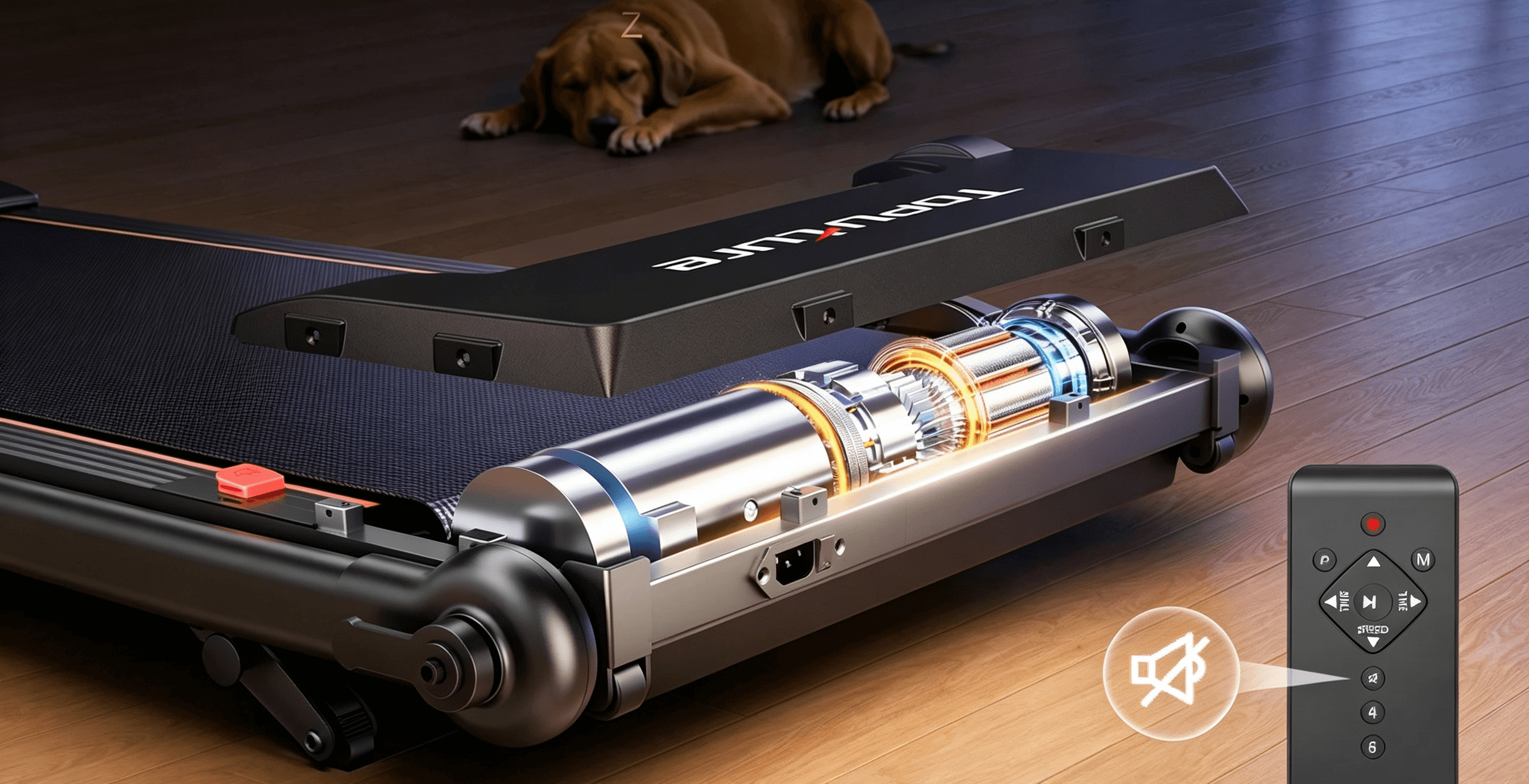
Apartment dwellers have one question before anything else: how loud is it? The honest answer is that modern engineering has changed the category. Quality home machines now run their motors below roughly 45 decibels — quieter than a normal conversation, comparable to a soft whisper of background hum, because manufacturers designing for shared-wall living treat noise as a headline specification rather than a footnote.
Foot-strike matters as much as motor hum. Multi-layer, shock-absorbing belts soften each step, protecting both your joints and the ceiling of the person below. Some machines even add a remote mute button to silence spoken voice prompts during early-morning or late-evening sessions. The nuance worth remembering: place the machine on a rubber mat, wear real running shoes, and land mid-foot rather than heel-first — together these can drop perceived noise by half.
Your Heart, Investigated
Cardiovascular adaptation is where the treadmill pays its deepest dividends. Within weeks of regular sessions, the heart muscle itself becomes more efficient — stroke volume increases, resting heart rate drifts downward, and blood pressure responds more calmly to stress. The classic training formula still works as a rough ceiling: 220 minus your age approximates a maximum heart rate, and the productive zone for most people sits between 60 and 70 percent of that number.
The interesting nuance is what the belt teaches you about your own body. On a treadmill, effort is completely measurable — speed, incline, pulse, and distance are all displayed in front of you. Runners who train indoors often develop an unusually accurate internal sense of pace, because the machine provides instant, honest feedback with every tenth of a mile. Over months, that calibration transfers to the road.
Muscles You Forgot You Had
A treadmill session is not just a leg workout. Yes, the thighs, glutes, and calves carry the primary load, and incline work targets them hardest. But the core stabilizes the trunk throughout, the postural muscles of the back and shoulders maintain alignment, and the arms swing in rhythm for balance. Even the small stabilizing muscles around the ankles get continuous micro-training with every stride.
For strength-training enthusiasts who view cardio as a rival, the treadmill plays a complementary role. Ten minutes of brisk walking before a lifting session acts as a targeted warm-up, driving blood into cold muscles and reducing injury risk. Used this way, the machine is not competition for the weights — it is the opening act that makes the main performance safer.
The Runner’s High, Manufactured On Demand
Endorphins are the treadmill’s secret ingredient. Sustained aerobic effort triggers the release of these natural mood-lifters, along with a cocktail of other neurochemicals that reduce stress hormones and produce the calm, clear-headed state runners chase. The effect is reliable enough that mental-health professionals now regularly prescribe structured walking and running as a first-line support for mild anxiety and low mood.
The home setting amplifies the psychological benefit. There is no audience, no comparison with the runner beside you, no self-consciousness about pace or clothing. You can watch a series, listen to an audiobook, or simply let the rhythmic belt noise become a moving meditation. Many people find that the treadmill session becomes a psychological ritual — the moment of the day that belongs entirely to decompression.
Interval Programs: Intensity, Scheduled
Interval training — alternating bursts of hard effort with recovery — is one of the most efficient ways to raise fitness and accelerate fat loss, and the treadmill is arguably the best interval machine ever built. Preset programs shift between brisk walking and faster running at set intervals, removing the discipline problem entirely: the machine decides, you comply.
A word of caution carried over from decades of coaching wisdom: intervals are a tool for trained bodies. Beginners should spend four to six weeks building a walking and jogging base before touching structured speed work. The belt does not forgive overreach — it will happily let you set a pace you cannot sustain, then remind you of the mistake for days afterward.
The Safety Key You Should Actually Use
Nearly every quality machine ships with a magnetic safety key that clips to your clothing. It exists for one reason: if you drift too far back on the belt, the key detaches and the belt stops within a step. Most owners remove it once, put it in a drawer, and never clip it on again. This is a mistake worth correcting — particularly in homes with children, pets, or late-night exercise habits when reflexes are not at their sharpest.
The rest of the safety picture is simple: keep the area behind the belt clear, never step onto a moving belt from a standstill (straddle the rails, start slow, then step on), and learn whether your model stops gradually or immediately so a panic stop never surprises you. Test the emergency stop once, deliberately, before you ever need it.
Space, Storage, and the Fold
The modern home treadmill has been reshaped by small-apartment reality. Folding models collapse to profiles between four and five and a half inches thick, slide under sofas or stand flat against a wall, and roll on built-in transport wheels between sessions. The footprint question that once disqualified an entire category of machines has essentially been engineered away.
One nuance affects daily life more than buyers expect: ceiling height and placement. Give yourself at least a stride and a half of clearance behind the belt, avoid doorways, and if the machine will live in a room with a ceiling fan or low fixture, measure your own height at a full running bounce before choosing the room. The best storage spot is the one you never have to think about — because every step of setup friction is a step of habit lost.
Choosing the Machine That Matches Your Life
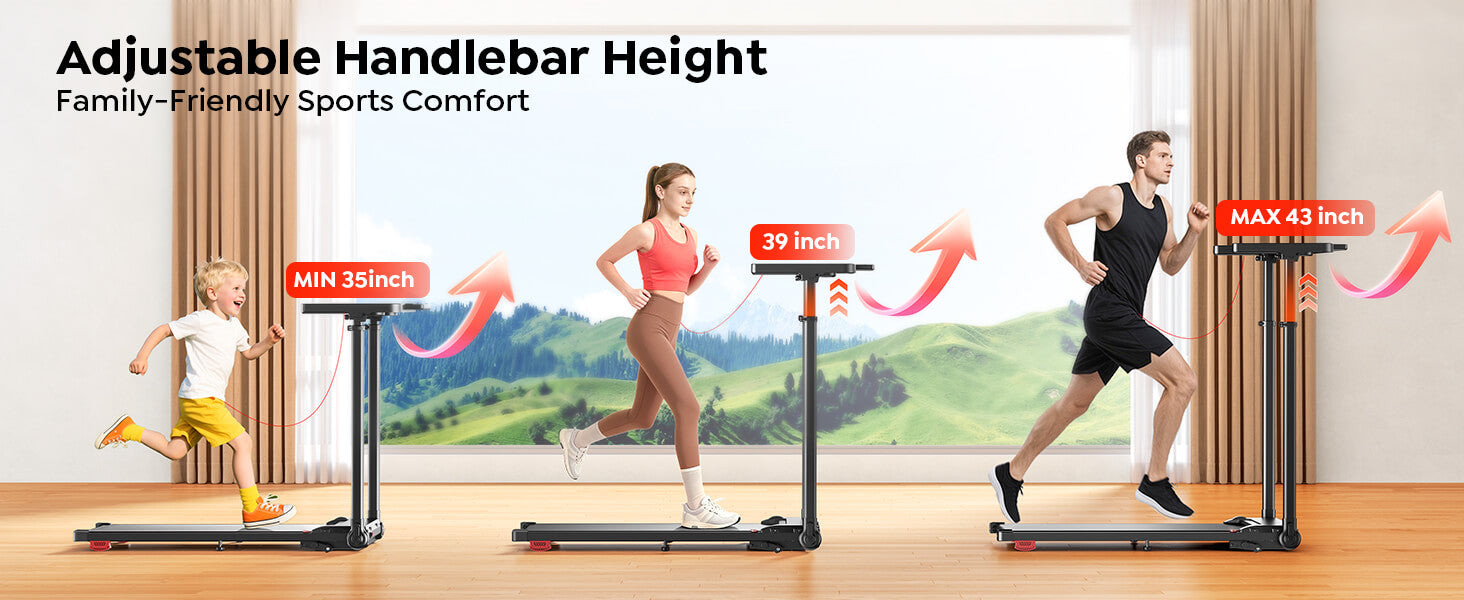
The final nuance is the most practical one: the right treadmill is the one whose specification list matches your actual life, not your aspirational one. Runners need speed headroom — look for a top speed of at least 10 miles per hour and a belt long enough for a full stride. Walkers and desk-workers can choose slimmer, quieter, cheaper machines. Multi-user households should prioritize adjustable handlebars; apartment dwellers should read the decibel rating before anything else on the box.
Check the small print that no marketing mentions: the weight capacity, the warranty terms, app connectivity for logging sessions, and whether the incline is motorized or manual. Then apply the oldest rule in home fitness, which survives every generation of technology: the best treadmill is the one you will actually use — the one that fits your space quietly enough, folds away easily enough, and sits close enough to your daily path that walking past it feels harder than stepping on it.
As an affiliate publisher, we may earn a commission from qualifying purchases made through links in this article.