The Mineral That Runs the Show
You don’t feel it working. There’s no dramatic moment when magnesium announces its presence. Yet this unassuming mineral orchestrates over three hundred enzymatic reactions in your body — every heartbeat, every thought, every movement depends on it. When levels dip, the effects ripple outward in ways that feel entirely unrelated: restless nights, creeping anxiety, muscles that won’t relax, a heart that skips when it shouldn’t.
Modern life quietly depletes it. Stress burns through magnesium stores. Processed foods offer almost none. Even healthy soils have grown poorer in this mineral over decades of intensive farming. Studies suggest more than half of adults fall short of recommended intake — often without realizing it.
This guide walks through twelve ways magnesium shapes your health, how to recognize when you’re running low, and the most effective ways to restore balance through food and thoughtful supplementation.
One: The Architect of Cellular Energy
At the microscopic level, magnesium is the gatekeeper of ATP — the energy currency every cell spends to function. Without adequate magnesium, ATP cannot be properly utilized. The result isn’t dramatic fatigue so much as a persistent sense that everything requires more effort than it should. Research confirms that even marginal deficiency reduces metabolic efficiency, leaving cells struggling to meet demand. When you optimize magnesium, you’re not adding energy — you’re removing the bottleneck that prevents your body from accessing what it already has.

Two: The Natural Calm in a Chaotic World
Magnesium regulates the neurotransmitters that govern your stress response. It modulates glutamate, the brain’s primary excitatory signal, while supporting GABA, the primary inhibitory one. Think of it as the brake pedal for an overactive nervous system. Clinical studies demonstrate that magnesium supplementation reduces subjective stress scores and lowers cortisol — the hormone that keeps you wired when you should be winding down. In moments of pressure, adequate magnesium is the difference between responding and reacting.
Three: The Guardian of Restorative Sleep
Sleep architecture depends on magnesium in ways science is still unpacking. The mineral helps regulate melatonin production, relaxes muscles that hold tension from the day, and supports the nervous system’s transition into parasympathetic dominance. Randomized controlled trials show that magnesium improves sleep efficiency, increases slow-wave sleep, and reduces early-morning waking — particularly in older adults. If you lie awake with a racing mind or wake unrefreshed despite adequate hours, this mineral deserves attention.

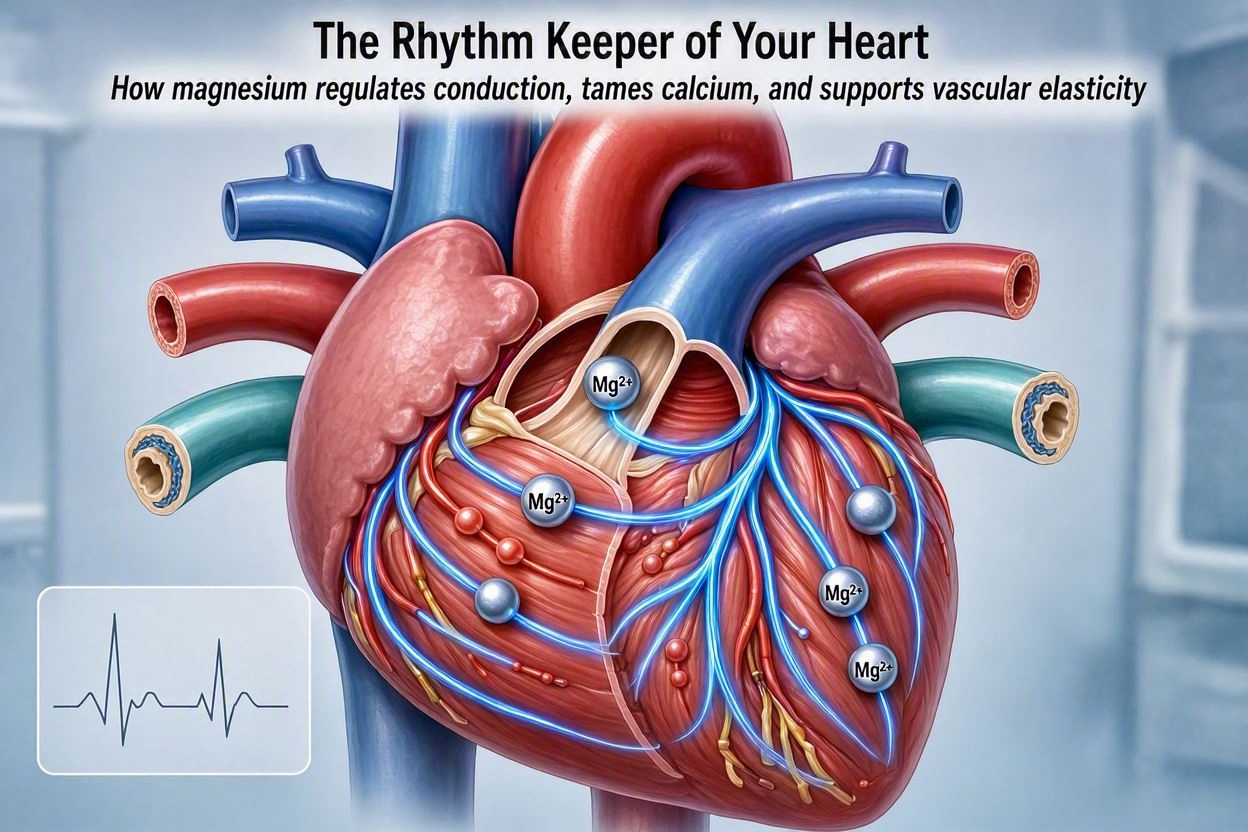
Four: The Rhythm Keeper of Your Heart
Your heart is an electrical organ, and magnesium conducts the show. It regulates the ion channels that coordinate each contraction, prevents calcium from overstimulating cardiac muscle, and maintains the elasticity of blood vessels. Population studies consistently link higher magnesium intake with lower rates of hypertension, arrhythmia, and coronary artery disease. A meta-analysis of over one million participants found that each 100 mg daily increase in dietary magnesium associated with a measurable reduction in cardiovascular risk. Your heart quite literally beats better with enough of it.
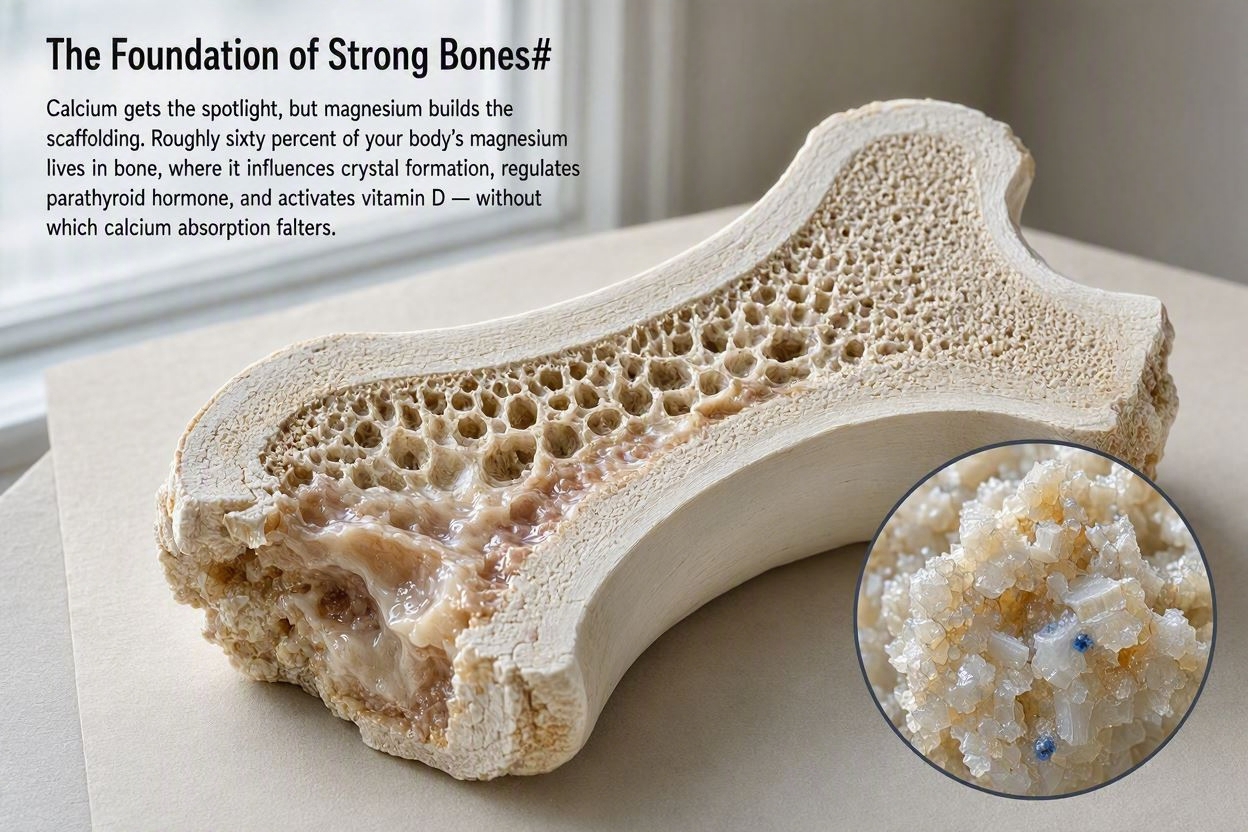
Five: The Foundation of Strong Bones
Calcium gets the spotlight, but magnesium builds the scaffolding. Roughly sixty percent of your body’s magnesium lives in bone, where it influences crystal formation, regulates parathyroid hormone, and activates vitamin D — without which calcium absorption falters. Longitudinal studies connect low magnesium intake with increased fracture risk and lower bone mineral density, independent of calcium status. For women approaching or past menopause, this mineral becomes especially critical as hormonal shifts accelerate bone turnover.
Six: The Ally of Metabolic Balance
Magnesium enhances insulin sensitivity at the cellular level, helping glucose enter cells rather than lingering in the bloodstream. Large prospective studies reveal an inverse relationship between magnesium intake and type 2 diabetes risk — those with the highest consumption show significantly lower incidence. For those already navigating blood sugar challenges, correcting deficiency improves glycemic control and reduces inflammatory markers. It’s not a cure, but it’s a foundational piece of metabolic health that’s often overlooked.
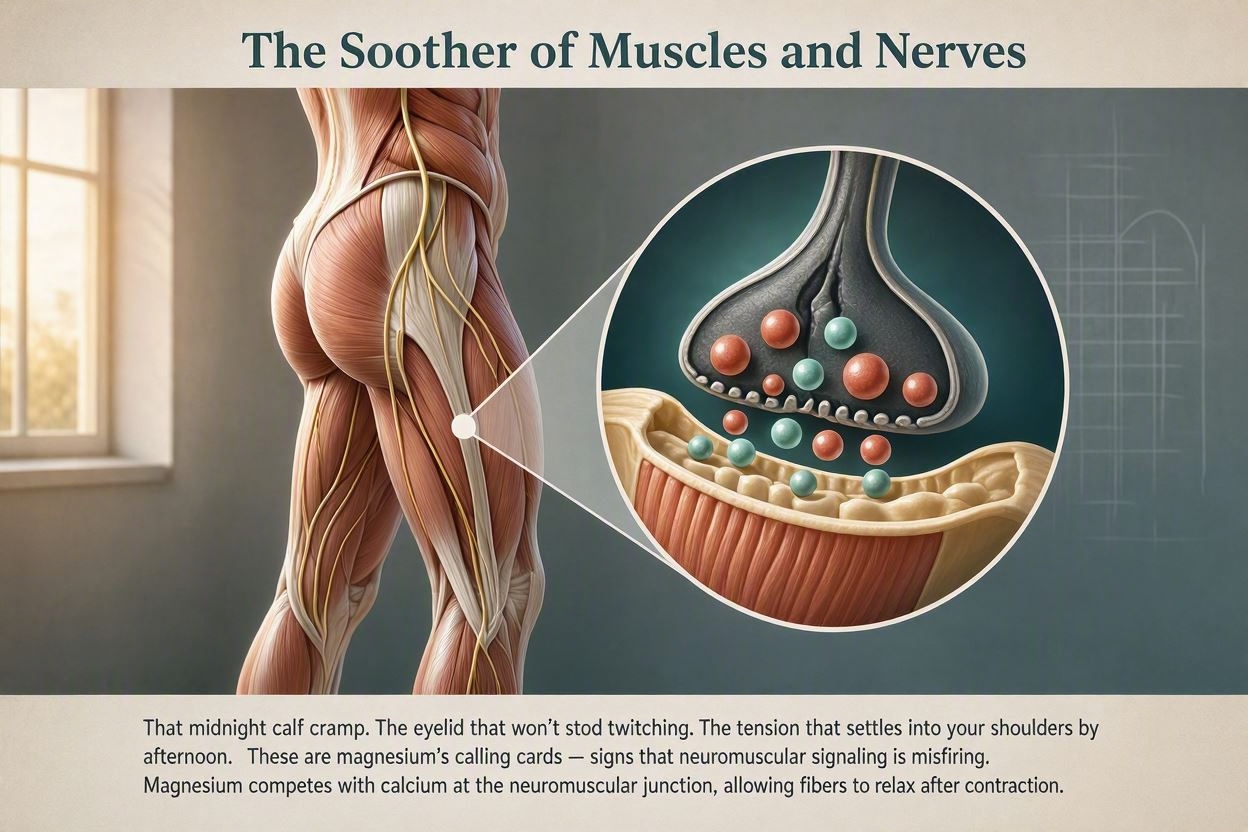
Seven: The Soother of Muscles and Nerves
That midnight calf cramp. The eyelid that won’t stop twitching. The tension that settles into your shoulders by afternoon. These are magnesium’s calling cards — signs that neuromuscular signaling is misfiring. Magnesium competes with calcium at the neuromuscular junction, allowing fibers to relax after contraction. Without it, muscles stay in a state of low-grade activation. Athletes and active people lose additional magnesium through sweat, making replenishment essential for recovery and cramp prevention.
Eight: The Modulator of Mood and Mind
Emerging research positions magnesium as a key player in mental wellbeing. It regulates NMDA receptors involved in synaptic plasticity, supports brain-derived neurotrophic factor (BDNF), and dampens the hypothalamic-pituitary-adrenal axis that drives chronic stress. Clinical trials demonstrate meaningful improvements in depressive and anxiety symptoms with magnesium supplementation — particularly in those with documented deficiency. While not a replacement for professional care, optimizing this mineral creates neurochemical conditions where resilience becomes more accessible.
Nine: The Partner in Hormonal Harmony
For women, magnesium’s influence extends across the menstrual cycle and beyond. It eases premenstrual tension by modulating prostaglandins, supports progesterone production in the luteal phase, and mitigates the fluid retention that accompanies hormonal fluctuations. During pregnancy, requirements rise substantially — magnesium supports fetal development, reduces leg cramps, and may lower preeclampsia risk. In perimenopause and beyond, it becomes a cornerstone of symptom management, from sleep disruption to mood stability to bone preservation.
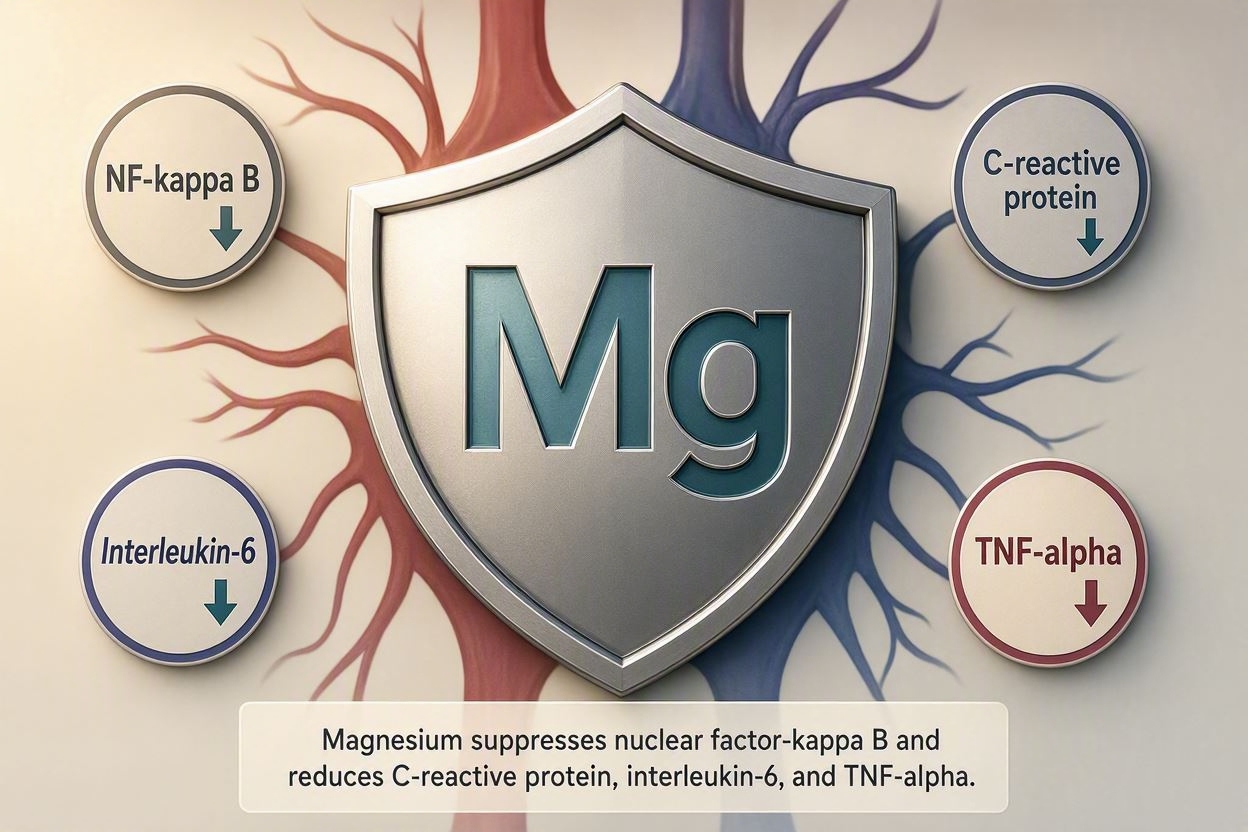
Ten: The Shield Against Chronic Inflammation
Low-grade, systemic inflammation underlies most age-related disease. Magnesium suppresses nuclear factor-kappa B — the master switch for inflammatory gene expression — and reduces C-reactive protein, interleukin-6, and TNF-alpha. Population data consistently show that higher magnesium intake correlates with lower inflammatory markers across diverse cohorts. In a world where chronic inflammation is the default state for many, this mineral offers a daily, dietary lever to push back.
Eleven: The Protector of Cognitive Function
Your brain consumes twenty percent of your body’s energy while representing two percent of its weight. That metabolic intensity demands robust magnesium-dependent enzymatic machinery. Animal studies demonstrate that magnesium enhances synaptic density and plasticity in the hippocampus — the seat of memory and learning. Human observational data links higher intake with better cognitive performance and slower age-related decline. While research continues, the mechanistic rationale is compelling: a brain with adequate magnesium simply functions more efficiently.

Twelve: The Daily Practice of Replenishment
Knowing matters less than doing. The recommended daily allowance ranges from 310–420 mg for adults, varying by age and sex — yet surveys show most people fall fifty to one hundred milligrams short. Food remains the ideal source: pumpkin seeds (535 mg per 100g), hemp seeds (700 mg), wheat bran (611 mg), flaxseeds (392 mg), almonds and cashews (roughly 290 mg), spinach (78 mg cooked), dark chocolate (300 mg), fatty fish, legumes, and whole grains. A day that includes a handful of seeds, a serving of greens, some nuts, and a square of dark chocolate likely meets the target.
Supplementation has its place — particularly for those with documented deficiency, high stress, intense training, or conditions that impair absorption. Forms matter: magnesium glycinate for sleep and anxiety, citrate for constipation, malate for energy and muscle pain, threonate for cognitive support. Start low, go slow, and pair with food to minimize digestive upset. Always consult a healthcare provider if you have kidney impairment or take medications that interact with magnesium — certain antibiotics, diuretics, and proton pump inhibitors among them.

The body doesn’t ask for much — just the raw materials to do what it already knows how to do. Magnesium is one of the most fundamental, and one of the most commonly missing. Replenishing it isn’t optimization. It’s restoration.